THREE:CHAPTER XIV. CRIMINAL ATTEMPTS, ACCOMPLICES, IMPUNITY.
FORE:But commerce and the interchange of the pleasures of luxury have this drawback, that however many persons are engaged in their production, they yet begin and end with a few, the great majority of men only enjoying the smallest share of them, so that the feeling of misery, which depends more on comparison than on reality, is not prevented. But the principal basis of this happiness I speak of is personal security and liberty under the limitations of the law; with these the pleasures of luxury favour population, and without them they become the instrument of tyranny. As the noblest wild beasts and the freest birds remove to solitudes and inaccessible forests, leaving the fertile and smiling plains to the wiles of man, so men fly from pleasures themselves when tyranny acts as their distributor.
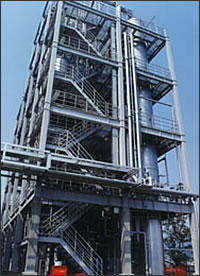
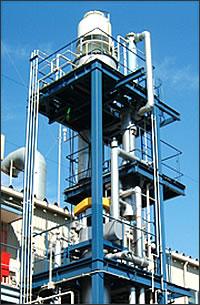
Methanol refinement systems, amyl alcohol refinement systems, ethanol refinement systems, hexanol distillation systems, propanol refinement systems, cyclohexanol distillation systems, isopropanol dehydration systems, ethylene glycol recovery systems, and butanol distillation systems.
FORE:Among other abuses of grammar, which have no slight influence on human affairs, that one is notable which makes the evidence of a condemned criminal null and void. ¡®He is dead civilly¡¯ say gravely the peripatetic lawyers, ¡®and a dead man is incapable of any action.¡¯ In support of this silly metaphor many[139] victims have been sacrificed, and it has very often been disputed with all seriousness whether the truth should not yield to judicial formulas. Provided that the testimony of a condemned criminal does not go to the extent of stopping the course of justice, why should not a fitting period be allowed, even after condemnation, both to the extreme wretchedness of the criminal and to the interests of truth, so that, by his adducing fresh matter to alter the complexion of the fact, he may justify himself or others in a new trial? Forms and ceremonies are necessary in the administration of justice, because they leave nothing to the free will of the administrator; because they give the people an idea of a justice which is not tumultuary and self-interested, but steadfast and regular; and because men, the slaves of habit and imitation, are more influenced by their feelings than by arguments. But such forms can never without fatal danger be so firmly fixed by the laws as to be injurious to truth, which from being either too simple or two complex needs some external pomp to conciliate the ignorant populace.Capital punishment is injurious by the example of barbarity it presents. If human passions, or the necessities of war, have taught men to shed one another¡¯s blood, the laws, which are intended to moderate human conduct, ought not to extend the savage example, which in the case of a legal execution is all the more baneful in that it is carried out with studied formalities. To me it seems an absurdity, that the laws, which are the expression of the public will, which abhor and which punish murder, should themselves[177] commit one; and that, to deter citizens from private assassination, they should themselves order a public murder. What are the true and the most useful laws? Are they not those covenants and conditions which all would wish observed and proposed, when the incessant voice of private interest is hushed or is united with the interest of the public? What are every man¡¯s feelings about capital punishment? Let us read them in the gestures of indignation and scorn with which everyone looks upon the executioner, who is, after all, an innocent administrator of the public will, a good citizen contributory to the public welfare, an instrument as necessary for the internal security of a State as brave soldiers are for its external. What, then, is the source of this contradiction; and why is this feeling, in spite of reason, ineradicable in mankind? Because men in their most secret hearts, that part of them which more than any other still preserves the original form of their first nature, have ever believed that their lives lie at no one¡¯s disposal, save in that of necessity alone, which, with its iron sceptre, rules the universe.
Hexane distillation systems, tall oil distillation systems, benzene distillation systems, lubricating oil refinement systems, xylene-free distillation systems, low-boiling gas distillation systems, ethylbenzene recovery systems, fusel oil distillation systems, naphthalene distillation systems, propylene recovery systems, and turpentine oil distillation systems.
FORE:
Ether distillation systems, camphor distillation systems, epichlorohydrin distillation systems, aniline distillation systems, dioxane refinement systems, acetonitrile distillation systems, furfural refinement systems, formalin distillation systems, cyclohexane distillation systems, monoethanolamine rectification systems, polyglycol ether distillation systems, dimethylformamide recovery systems, acrylic glycol ether distillation systems, acrylonitrile refinement systems, acetone recovery systems, pyridine distillation systems, methyl ethyl ketone recovery systems, picoline distillation systems, methyl isobutyl ketone recovery systems, and acetaldehyde recovery systems.